
El Paso Arrest Reports Window
El Paso County posts no countywide multi-day booking archive. EPSO once ran an Online Blotter with call number, date, address, grid, and a problem description. That link now returns a 404. It was an incident tool, not a booking roster. So its old labels prove nothing about full arrest coverage. The working public log is the CSPD Police Blotter. Entries can list incident date and time, division, title, location, a summary, adults arrested, and contact details. CSPD itself warns the blotter covers only a fraction of daily calls. It is preliminary and can change. It also tracks Colorado Springs releases, not bookings from Fountain, Monument, unincorporated El Paso County, or another agency.
Fountain and Monument offer no comparable daily arrest pages. Their police records channels handle incident reports. If either agency booked someone into the county facility, EPSO answers for the jail side. That split matters. A Colorado Springs log should never stand in for all of El Paso County.
Read El Paso Police Reports
Start with the agency and the date range. A city incident report, a county jail booking, and a court file are three different records, even when they describe one event. A sensible multi-day workflow follows.
- Check the CSPD blotter for a Colorado Springs event, working from incident date, division, title, location, and adults-arrested text.
- Read the disclaimer and contact field. Treat the summary as preliminary and selective.
- For a county or other-agency event, identify the arresting agency and request its incident report.
- Ask EPSO Records for the booking sheet, release record, transfer record, or photograph using a clear date range and booking number when known.
- Check the Colorado Judicial Branch docket for later hearings and disposition.
Need a named person's custody status right now? Use the Arrested Today page. A blotter entry can linger after release, while a jail roster shifts the moment custody changes.
El Paso Blotter Entry Fields
These fields come from different record states. CSPD entries describe selected incidents, historical EPSO blotter fields described calls, and booking details live in the jail record rather than either log.
| Field | Source and limitation |
|---|---|
| Record or call ID | Identifies an incident entry; it is not an EPSO booking number or court case number. |
| Incident date and time | May differ from arrest time, jail arrival, booking completion, and publication time. |
| Division and location | Places the reported incident within CSPD operations; protected details may be withheld. |
| Title and summary | A preliminary public-release account that may be corrected or supplemented. |
| Adults arrested | Names an arrest where included, but the blotter is not a complete arrest list. |
| Charge, bond, or photo | Not systematic blotter fields; seek the booking record, court file, or official photo request. |
A public summary can leave things out. Juveniles, victims, medical details, protected addresses, and active-investigation facts may never appear. Photos need the same care. CSPD or EPSO may release an image in a selected post, and a news outlet may reuse that agency file. Neither makes a complete photo log. For a specific booking photo, file the proper records request and follow the custodian's access rules. An older image never proves current custody.
Weekend El Paso Arrest Reports
EPSO and CSPD promise no weekend or holiday posting pattern. A Monday search can mislead. Reports may reflect agency review. They may also reflect public-information choices, court timing, or later corrections rather than the pace of jail bookings. So a search may miss an arrest still awaiting release approval. It may also include someone no longer held. Tie the event date, arresting agency, and booking number together. The El Paso County Criminal Justice Center receives people arrested across the county. Still, the arresting department owns the narrative, the body-camera record, and the original evidence. EPSO owns its jail records. Courts own their case files. Note: A late post does not make the arrest later. A missing post does not mean no booking happened.
Archive El Paso Arrest Reports
EPSO publishes no stated retention period online. The question covers current booking entries and photographs alike. A vanished web page is not a destroyed record. Contact the EPSO Records Unit with the name, booking number, arresting agency, date range, and the fields you want. Ask whether the booking sheet, release record, photo, court-update history, or transfer record is still held. Ask which office holds it. If EPSO lacks an older record, ask whether it was transferred or destroyed under an adopted schedule.
A court file can outlive a jail web entry. Sealed, expunged, juvenile, and confidential material may still be withheld from ordinary public access. The custodian's answer controls. Other Colorado retention schedules do not bind EPSO. For deep history, the Colorado State Archives search offers a neutral interface. It can locate older government collections. It is not a recent booking log, and it does not mirror modern EPSO roster entries.
State custody is the last stop. If an old county case later led to a prison term, the Colorado Department of Corrections offender search is the right downstream locator. CDOC does not archive El Paso County booking sheets. Its offender number is not an EPSO booking number.
It is not a recent El Paso County booking log.
El Paso Arrest News Limits
News stories help round out what official El Paso County sources leave out. The Gazette runs regular county crime recaps. KRDO's El Paso County crime archive and KKTV's crime section both track ongoing regional cases. These outlets pick the stories they find newsworthy. Some include photos handed out by the agencies involved. Still, none of them publishes a full county booking log. A news feed cannot tell you everyone arrested in El Paso County. Editors choose what to cover. They do not log each arrest. The KRDO archive gives a good sense of how story-based arrest coverage looks once you have already checked the official sources.
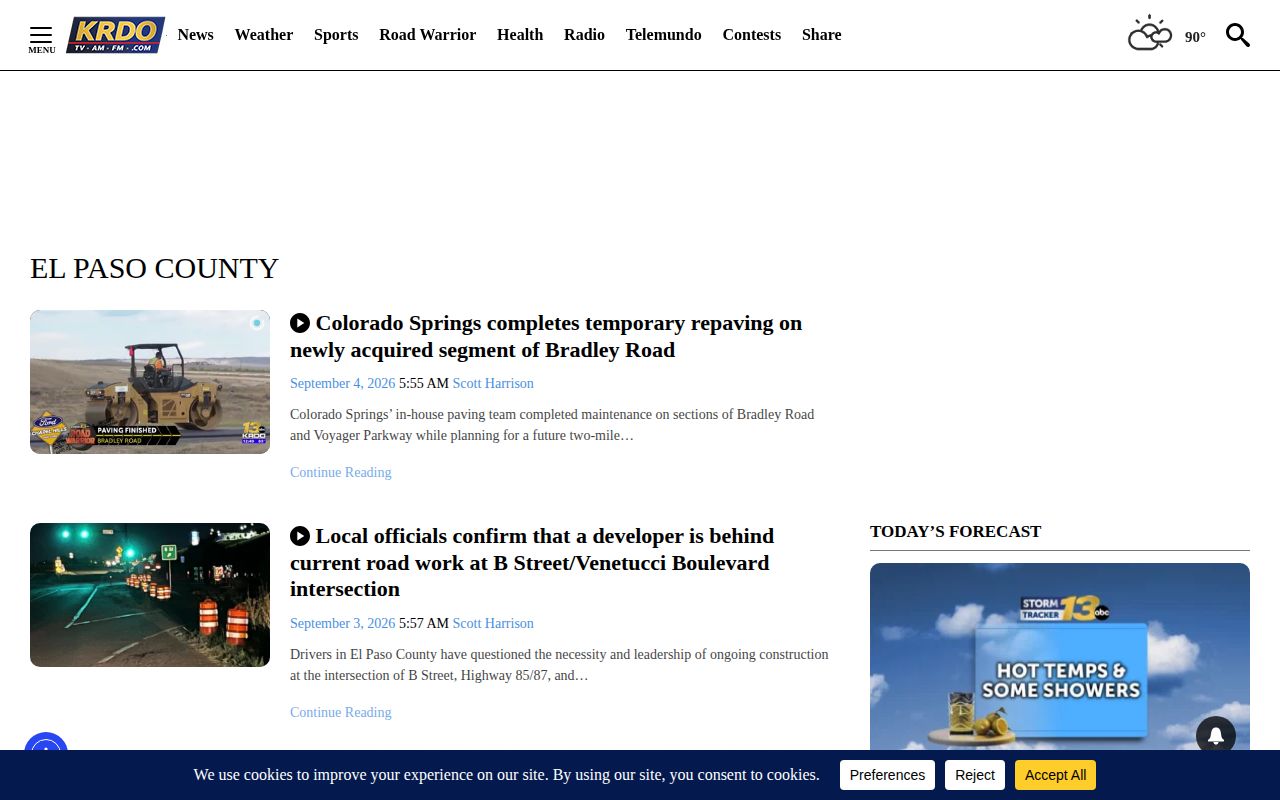
A news report can add bond details or court dates. It cannot confirm who is still in custody. Before you rely on a reporter's account of an El Paso County arrest, check an agency release, a blotter entry, or a court filing. Those records say who was arrested and charged. News summaries often use the word accused, and that word matters. Treat a police-supplied photo as context only.
CSPD Arrest Data Is Different
CSPD runs its own police data hub. It includes an arrest-data story. That is a municipal layer, not a live El Paso County custody tool. It answers a different question than the EPSO inmate search does. The city story shows trends in Colorado Springs arrest data over time. The county tools differ. They show selected public-release incidents or who is currently in the county jail. Keep them separate. The CSPD arrest-data story makes the municipal layer easy to see.
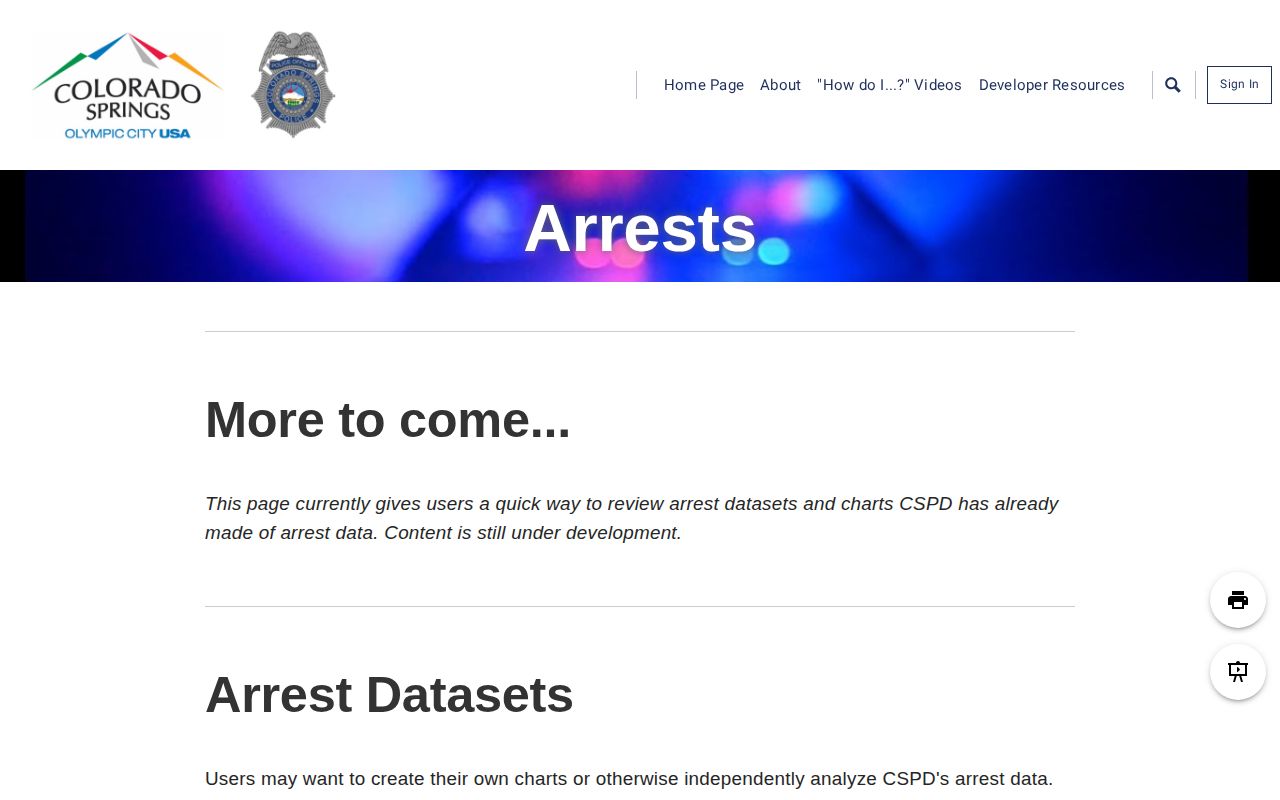
Treat the data display as trends, not a county arrest roster.
Public Record Search
Sponsored Results